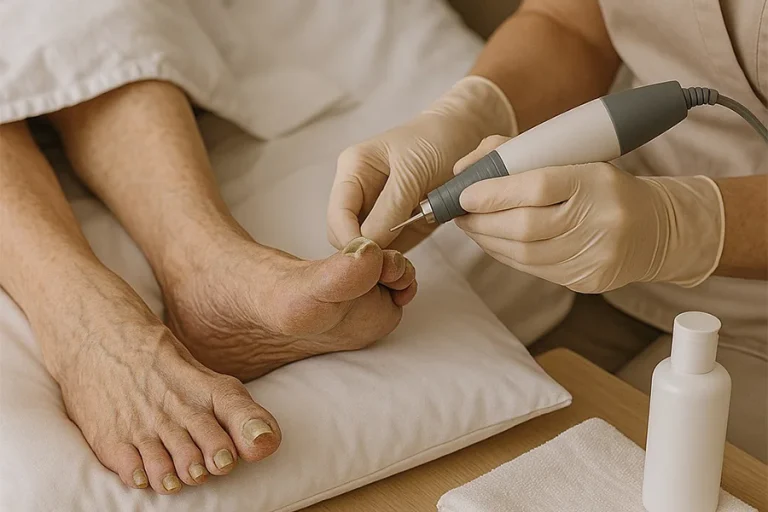
Thick toenails are a common problem: the nail turns yellow, becomes harder and sometimes partly lifts. It is not always fungus — a similar condition can be caused by onychauxis, a benign thickening of the nail plate without structural damage. If you notice such symptoms, book a correction of thick toenails with a podiatrist. We provide home visits in Tallinn and Harjumaa.
Next, let’s see how to tell the difference and what to do:
What is onychauxis (benign thickening)
Onychauxis is a thickening of the nail plate without infection and without structural damage. It is often linked to mechanical pressure or age-related changes and usually shows up as thick toenails.
Causes of thick toenails:
constant pressure and friction from shoes (especially in older people);
nail trauma (microtrauma, sports, tight shoes);
poor peripheral circulation;
age-related changes;
chronic conditions (including diabetes);
hereditary factors.
Typical signs:
nail is thickened and hard;
color ranges from yellowish to grayish;
shape may change but the nail does not crumble;
usually no itching, odor or signs of inflammation;
most often appears on the big toenails.
Thick toenails caused by fungus (onychomycosis)
Onychomycosis is a fungal infection of the nail (caused by dermatophytes, yeast, or mold) that requires laboratory confirmation and specific treatment. Unlike benign thickening, fungal infection is contagious and progressive.
Signs of fungal thick toenails:
color changes: yellow, brown, or greenish;
nail structure becomes loose, layers split and crumble;
possible itching, unpleasant odor, inflammation of surrounding skin;
in advanced cases the nail partly or completely breaks down or detaches.
Important: fungal infection is an infectious disease. The diagnosis must be confirmed with laboratory tests (PCR or microscopy), not by appearance alone.
Quick check: Onychauxis vs Fungal infection
Sign
Onychauxis
Fungal infection (Onychomycosis)
Color
Yellowish or grayish
Yellow, green, brown
Surface
Smooth and dense
Loose, brittle
Layering
Absent
Often present
Itching, odor
No
Often present
Spread to other nails
Rare
Common
Infectious
No
Yes
Confirmation
Visual, additional tests if needed
Mandatory – fungal test (PCR or microscopy)
Sign
Onychauxis
Fungal infection
Color
Yellowish or grayish
Yellow, greenish, brownish
Surface
Smooth and dense
Loose, brittle
Layering
Absent
Often present
Itching, odor
No
Often present
Spread to other nails
Rare
Common
Infectious
No
Yes
Confirmation
Visual, additional tests if needed
Mandatory – fungal test (PCR or microscopy)
When to see a doctor urgently
severe pain, rapidly increasing swelling or redness;
presence of pus or bleeding;
fast deformation or destruction of the nail;
in case of diabetes — any wounds, injuries or signs of infection around the nail.
What to do if you notice thick toenails
Book an appointment with a podiatrist for an initial assessment and gentle correction of the thickening.
If fungal infection is suspected, take a test (scraping / PCR test, microscopy).
Get a personal care plan: nail and skin care, footwear advice, and pressure relief recommendations.
Before the visit, do not soak or cut the thickened nail; avoid antifungal products for 7–14 days before the test.
Wear shoes with a wide toe box; if you feel pain from pressure, use temporary relief such as a soft pad or plaster.
In case of diabetes — schedule regular foot check-ups; home correction only under a specialist’s guidance.
Conclusion: thick toenails are not always caused by fungus. Often it is onychauxis, a condition that can be effectively corrected by a podiatrist. Only a specialist can make an accurate diagnosis and treatment plan.
Podiatry services for nail problems
Nail problems, including thick toenails? These procedures will help restore nail health and comfort.